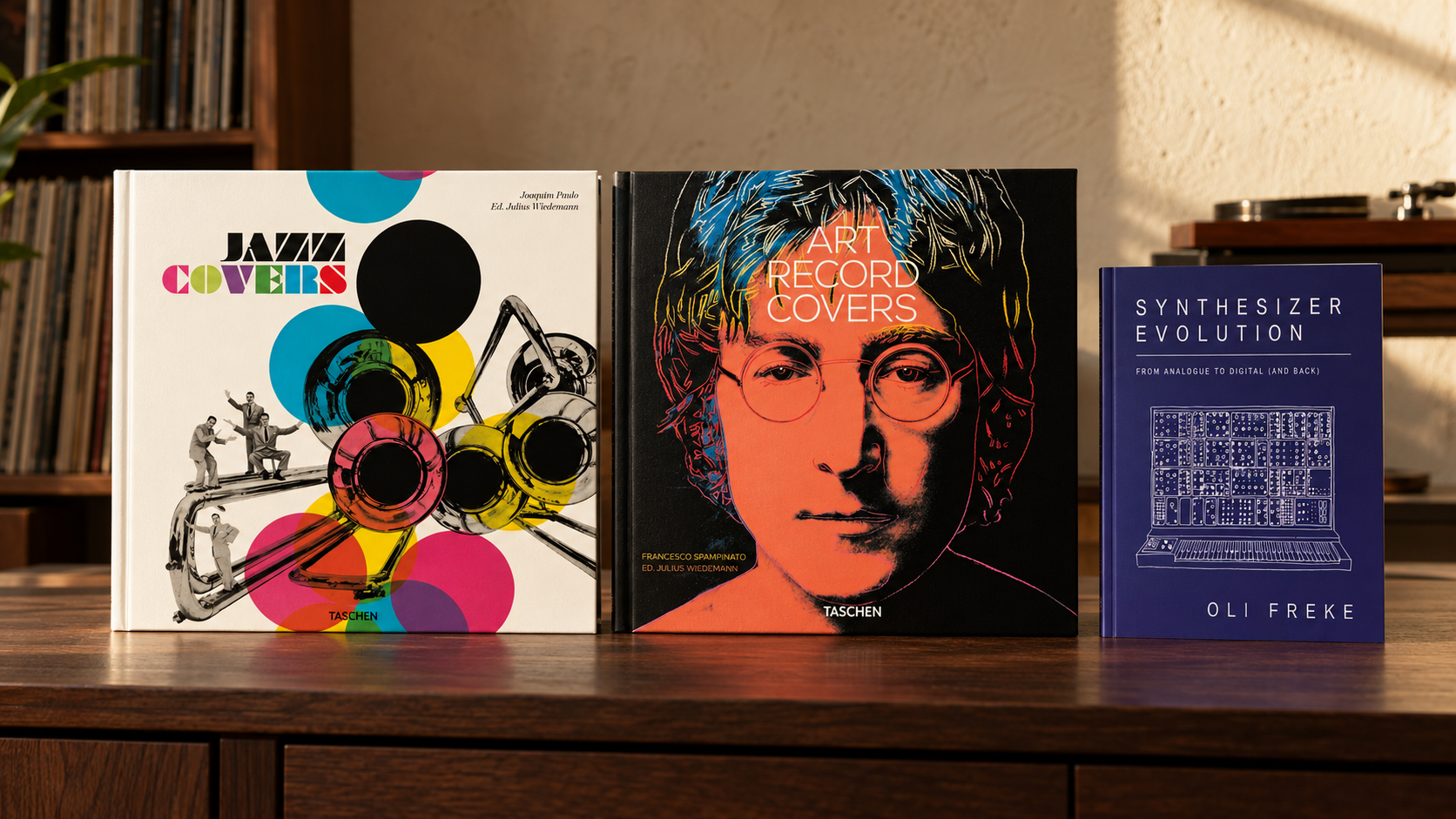
THE DESIGN LIBRARY · Research reviewed October 24, 2026
This article contains affiliate links. If you buy through a link, Form & Paper may earn a commission at no extra cost to you. As an Amazon Associate I earn from qualifying purchases.
Choose Jazz Covers for jazz sleeve design, Art Record Covers for the meeting of visual art and records, or Synthesizer Evolution: From Analogue to Digital (and Back) for illustrated instrument history. The first two are substantial coffee-table hardcovers; the third is a smaller paperback for a different kind of browsing.
A good music book can start with the thing a listener already pays attention to: the lettering on a sleeve, an artist’s image, or the instrument behind a sound. “They like music” is a useful beginning, but it is not quite enough to choose a gift.
This edit compares three visual approaches rather than trying to represent every genre. Ask what they look at while they listen. Then match the book’s contents and physical format to that habit.
Three books, three ways of looking
| Book | Choose for | Format and pages | Published size |
|---|---|---|---|
| Jazz Covers | The jazz listener who notices typography and photography | Square hardcover · 552 pages | 29.3 × 29.3 cm |
| Art Record Covers | The art lover whose interests cross genres | Square hardcover · 448 pages | 29.3 × 29.3 cm |
| Synthesizer Evolution: From Analogue to Digital (and Back) | The electronic-music fan curious about the instruments | Paperback · 128 pages | 23 × 17.4 cm |
The two square hardcovers are the ISBNs compared here. Smaller anniversary editions are separate formats. Dimensions describe closed books; leave additional space to open them.
01 Jazz Covers
Joaquim Paulo · edited by Julius Wiedemann
TASCHEN · 2021 catalog edition
Square hardcover · 552 pages · 29.3 × 29.3 cm
English, French and German
ISBN-13: 9783836585255
For the person who turns the record sleeve over
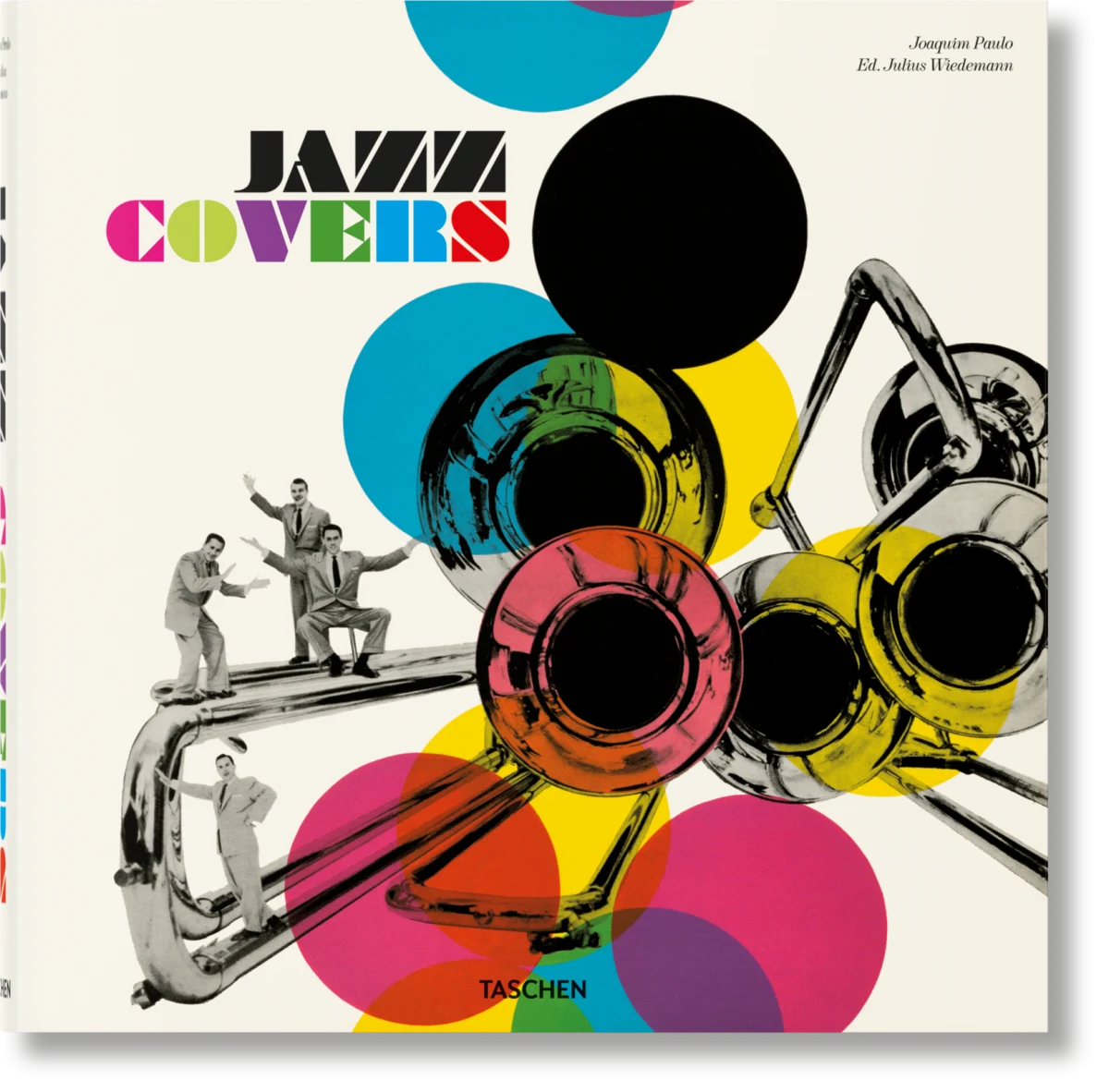
Jazz Covers brings together jazz sleeve designs from the 1940s to the early 1990s. The reproductions include both photography and illustration, with credits and album information alongside them.
Why choose it: this is our pick for someone who notices how type, photographs and color establish the character of an album. It offers a visual companion to listening rather than asking the recipient to work through a musician’s life in order. A useful gift question is whether they enjoy looking at sleeves as much as sorting the records.
The tradeoff: the square hardcover measures 29.3 centimeters on each side and weighs a publisher-listed 4.18 kilograms. That makes the place where it will be opened part of the decision. Choose it for a table with room, rather than assuming any gap beside the record player will do.
Edition check: this guide links ISBN 9783836585255. Smaller anniversary versions have different ISBNs and page sizes. Confirm the selected offer rather than relying on the familiar title or a cover thumbnail.
02 Art Record Covers
Francesco Spampinato · edited by Julius Wiedemann
TASCHEN · 2017 catalog edition
Square hardcover · 448 pages · 29.3 × 29.3 cm
Multilingual introduction; remaining text and captions in English
ISBN-13: 9783836540292
For the listener who follows the artist as well as the band
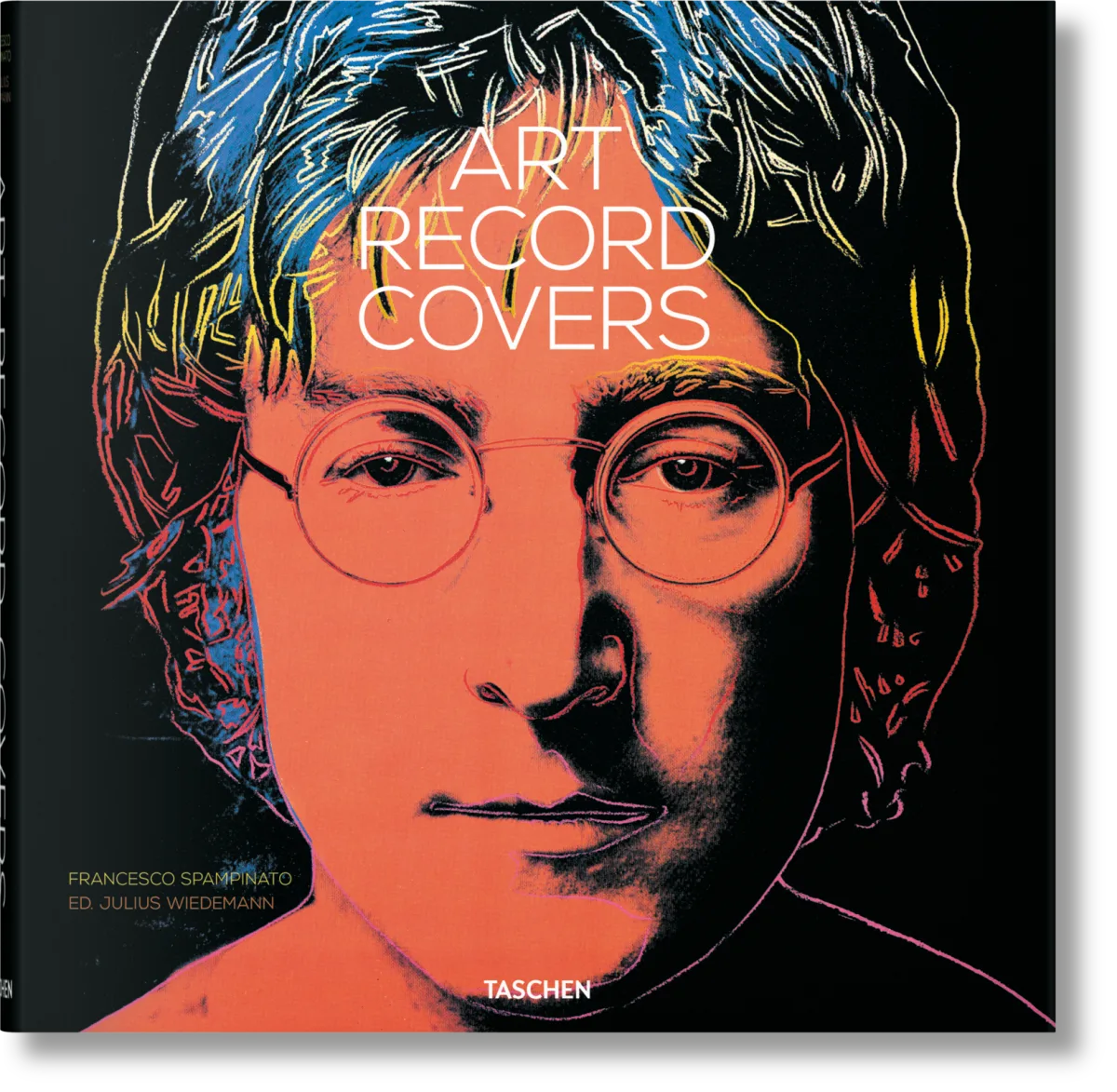
Art Record Covers approaches records through visual artists, with around 500 examples dating from the 1950s onward. Artist and recording details, commentary and interviews connect the sleeves to a wider art context.
Why choose it: this is our choice for someone whose interests move between galleries, graphic images and a record collection. The buying question is less about loyalty to a single musical genre and more about curiosity over how an image becomes attached to a sound. It also gives an art-oriented giver a concrete route into a music fan’s interests.
The tradeoff: this is another 29.3-centimeter-square hardcover, with 448 pages and a listed weight of 3.85 kilograms. Its focus is artists’ record covers, so it should not be mistaken for a complete history of popular music or every important sleeve.
Language check: TASCHEN specifies a multilingual introduction; the other texts and captions are in English. The multilingual catalog label does not promise parallel translations throughout. The selected ISBN is 9783836540292.
03 Synthesizer Evolution: From Analogue to Digital (and Back)
Oli Freke
Velocity Press · 2021 edition
Paperback · 128 pages · 23 × 17.4 cm
English
ISBN-13: 9781913231064
For the person who asks what made that sound

Synthesizer Evolution: From Analogue to Digital (and Back) surveys synthesizers, samplers and drum machines made between 1963 and 1995. Hand-drawn instrument illustrations sit alongside specifications and short facts. It is an English-language, 128-page paperback.
Why choose it: give this to the listener who is curious about the machines behind electronic music. The visual subject changes from the sleeve to the instrument itself. It can suit someone who likes comparing panels and physical layouts even when a large photography book would feel excessive.
The tradeoff: this is a compact illustrated reference, not a large hardcover showpiece or a current synthesizer buying guide. Its historical period also means it cannot stand in for a directory of contemporary equipment. Choose a different resource if the recipient’s immediate goal is learning to program a particular instrument.
Format check: the publisher describes a 23 × 17.4-centimeter book. Its additional-information field gives a different overall measurement; we use the description’s book format here. Match ISBN 9781913231064 to the full paperback rather than the author’s separate small zines.
Make the choice from their listening habits
They keep the sleeve nearby. Jazz Covers is the closest match when jazz records and their design are already part of the pleasure. Art Record Covers offers a wider visual-art route across recordings. There may be overlap in the general subject, so a pair is not automatically a more thoughtful gift than the better-fitting single book.
They talk about the keyboard sound. Synthesizer Evolution: From Analogue to Digital (and Back) answers a different curiosity. It looks at instruments rather than album packaging. The small paperback format can also make more sense for someone who carries a book between a desk and a listening chair.
Before giving a music book
- Ask for a shelf photograph. A familiar title may already be there in another format. Replacing a smaller copy with a large one should be an intentional choice.
- Check where it will open. Closed-book dimensions are only the beginning. Leave room for both boards of a hardcover, and keep the turntable controls accessible.
- Read the offer, not just the title. Binding, ISBN, language and condition matter. This is especially useful when different editions share a retailer page.
- Add a listening suggestion. A short handwritten note about what caught your eye makes the gift personal without buying equipment whose compatibility you have to guess.
Questions before checkout
Are all three coffee-table hardcovers?
No. Jazz Covers and Art Record Covers are large square hardcovers in the editions selected here. Synthesizer Evolution: From Analogue to Digital (and Back) is a smaller paperback included for its illustrated subject and recipient fit. The format difference is part of the recommendation.
Which would suit a general music fan?
First ask whether they are drawn to album imagery, visual artists or instruments. These three books serve those interests; none is a survey of every listener’s tastes. A person who chiefly wants lyrics, biography or a favorite orchestra may need a more specific book.
Do the books include music to play?
This comparison does not establish an included record, download or listening subscription. Treat the linked products as books and check the exact seller’s contents before purchase.
How this guide was researched
We compared publisher contents, binding, language and dimensions with the Amazon catalog records for the linked ISBNs. The recommendations are editorial judgments about subject and gift fit. We have not handled these specific physical editions for this guide or independently tested printing, binding or paper quality.
Prices, seller condition, stock and delivery vary; check the offer at purchase. Cover photographs are publisher references and remain the property of their rights holders. The hero is an AI-assisted editorial arrangement based on cover references; it is not a photograph of a tested setup.
Research sources: TASCHEN, selection 1; TASCHEN, selection 2; Velocity Press, selection 3. Reviewed October 24, 2026.